
In this circle, the mood can shift faster than a crypto price crash.
Just days ago, bitcoin mining company CleanSpark reached an agreement to buy land in Texas as part of its deeper push into artificial intelligence and high-performance computing (HPC).
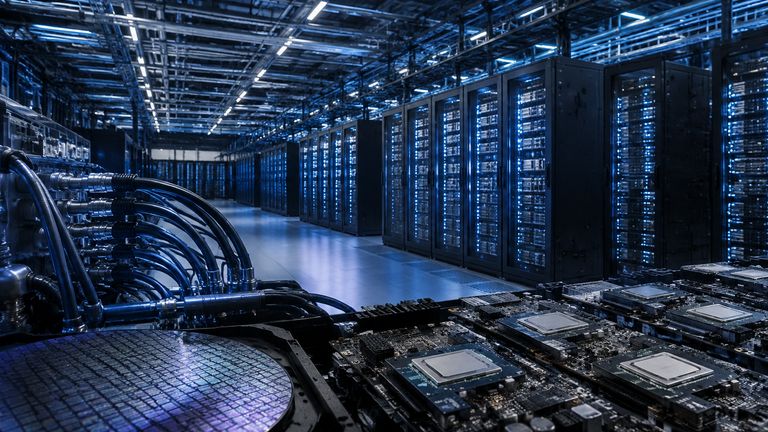
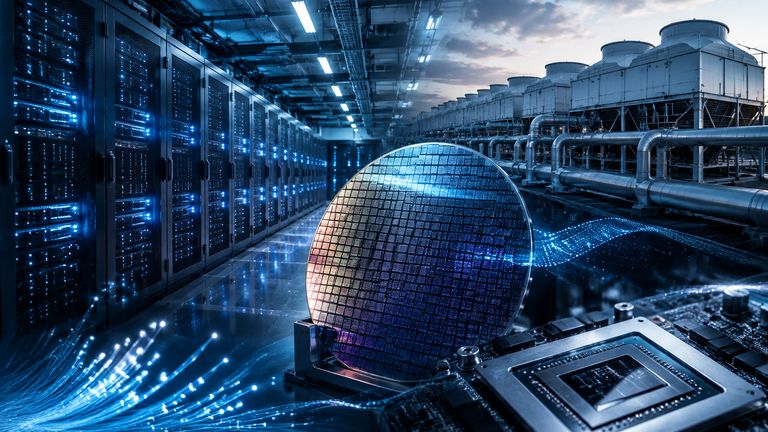
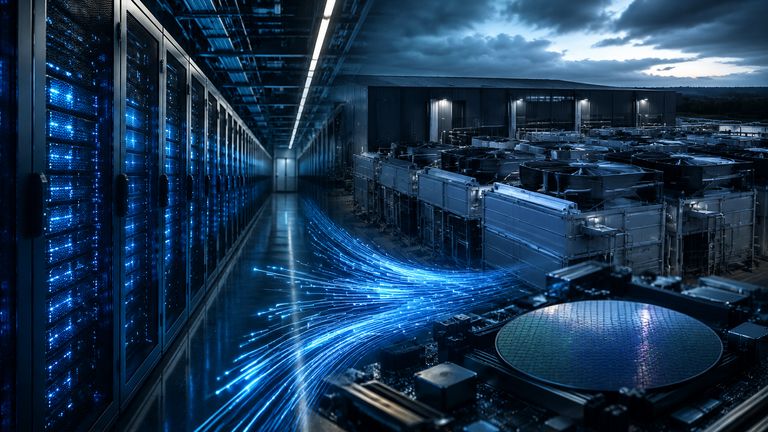
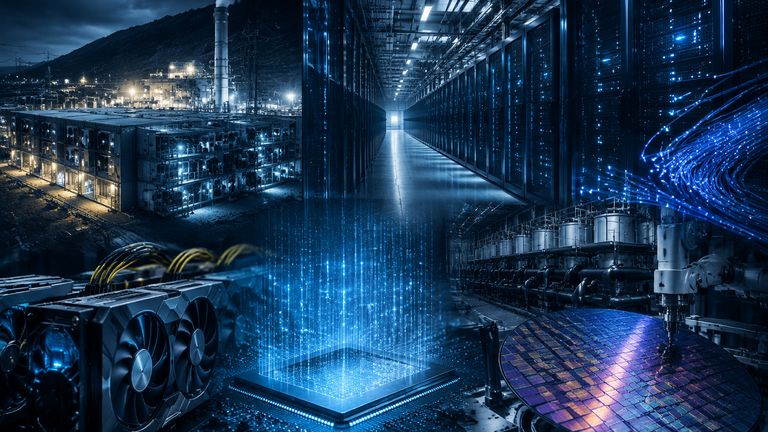
CleanSpark said Wednesday it has entered into a definitive agreement to buy 447 acres in Brazoria County, Texas, for the development of a 300-megawatt data center that could eventually be expanded to 600 megawatts.
Together with another project in the region, these data centers are “purpose-built for AI and high-performance computing workloads.” CleanSpark Chairman and CEO Matt Schultz said: “Demand for scalable, native AI computing continues to accelerate, while access to transmission-level power in strategically advantaged regions is becoming increasingly constrained.”
On the surface, this looks like another typical mining expansion. But a closer look at the keywords in the contract shows the market has quietly shifted: this land purchase is not just for crypto mining, but for HPC, or high-performance computing, and AI.
Put simply, miners once criticized for “wasting electricity” are now busy recasting themselves as “AI infrastructure providers.”
I. Texas’s “Big Computing Power Infrastructure” Buildout: Miners Want a Share, Too
Today’s Texas is no longer just cowboys and oil. It is also home to one of the world’s densest computing power black holes. CleanSpark’s move at this moment looks shrewdly timed. The two sites it is acquiring come with existing power distribution facilities, but the real prize is their so-called “grid-connection advantage.” In the computing power race, GPUs are expensive, but harder to secure than the GPUs is the cable that can deliver massive amounts of electricity.
CleanSpark CEO Zach Bradford put it diplomatically in a statement: the company has power, land and experience managing large-scale hardware, making a move into AI computing power services a natural next step.
But the subtext is clear: crypto mining alone can no longer carry the story.
As Bitcoin’s post-halving rewards shrink, the days of surviving on luck and power-price arbitrage alone are getting tighter.
Across the Pacific, Silicon Valley is so starved for computing power that the data center space miners once used to house mining rigs has suddenly become prime real estate for AI giants.
II. Is So-Called “HPC” a Lifesaver or Just a Painkiller?
Converting a mining farm into an AI data center sounds attractive. In practice, it is full of pitfalls.
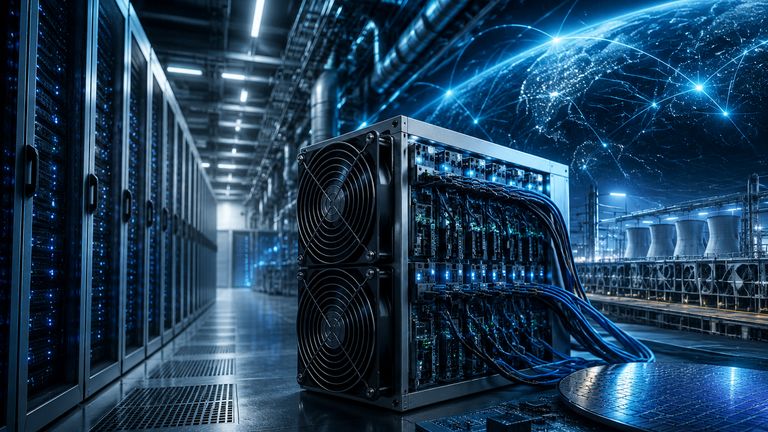
You have to understand that Bitcoin mining rigs, built around ASICs, and AI servers, built around GPUs, operate in entirely different environments. Mining rigs are rugged: keep a fan blowing, keep the rain off, and they can get to work. The expensive GPUs used for AI, by contrast, have exacting requirements for temperature control, humidity, and network latency.
CleanSpark’s so-called “dual-engine” strategy is straightforward: hedge the risk. If Bitcoin prices fall, it can redirect surplus power allocation to AI customers and collect steadier rental income.
Valuation uplift: In Wall Street’s eyes, “miners” are highly cyclical gamblers, while “AI infrastructure service providers” are technology stocks with a long runway and deep compounding potential.
This pivot carries a hint of reluctant “pay-to-play” logic. Mining companies hold scarce power licenses, almost like tickets into the AI era. But whether those tickets get them to the end of the line still depends on whether they can master the complex management systems that come with it.
III. Don’t Let the Ideal of “Decentralization” Blind You
We often describe blockchain as decentralized, but reality is making a mockery of that claim.
As giants like CleanSpark aggressively swallow up land and power resources in Texas, the power structure of computing power is rapidly collapsing.
The small mining farms once scattered around the world are disappearing, replaced by computing power fortresses of hundreds of megawatts, run with military-style discipline.
More ironically, mining companies are now rushing into AI, meaning the computing power originally built to challenge traditional finance may ultimately end up as the low-level labor force serving Big Tech.
You thought you were taking part in a financial revolution. In reality, you were just working as the “power waiter” for large models.
At the end of this article, I want to talk about an uncomfortable truth.
Everyone is watching how much land CleanSpark has bought and how much capacity it has added. Few are asking a harder question: when Bitcoin computing power and AI computing power converge on the Texas grid, are we drifting further from the original dream of decentralization?
This shift by mining giants is, at its core, a harvest of “resource dominance.” They are using the original capital accumulated from early crypto mining to rapidly lock up what may be the scarcest resource of the next decade: energy.
The next phase of competition may no longer be about algorithms, or even Bitcoin prices, but about who can move more aggressively to secure the handful of substations that matter.
Under this logic, ordinary investors may see only CleanSpark’s rising share price. Closer observers see something else: the computing power elite using AI as a new wrapper to carry out a second land grab across energy and the digital world.
Ultimately, AI will not save miners without a moat. It will only push weaker players out faster and turn energy-rich giants into a new class of “power barons.”
Comments
00No comments yet. Be the first to weigh in.