
Bitcoin miners are collectively standing at a crossroads: on one side is belief, on the other is survival.
Most are now choosing the latter.
A chilling data point has been circulating in the industry: Bitcoin mining revenue has fallen to an all-time low.
On the other side of the coin, Silicon Valley’s AI giants are waving checks and buying up mining farm infrastructure in blocks, almost as if they were collecting scrap.
Behind what looks like an ordinary “industrial transition” lies a truth cold enough to unsettle the crypto world: the network security Bitcoin has long been proud of is being dismantled, monetized, and permanently repurposed.
From “Digital Gold” to Computing Power Labor
“Today’s miners are living worse than dogs,” a veteran miner who has spent five years in Ordos told me privately.
He said halvings used to be a celebration, with everyone betting that the coin price would double. But after this halving, the price has not doubled, while difficulty has already gone through the roof.
Add rising global electricity prices, and many small and midsize mining farms can run for a month only to find that, after power bills, net profit is negative.
According to the latest industry reports, as mining rewards have plunged and network difficulty has surged, the revenue miners can earn per terahash of computing power has fallen to rock-bottom levels.
That creates a very practical problem: if crypto mining no longer makes money, the substations, industrial fans, containers, and ultra-high-voltage cables already in hand need somewhere to go.
As it happens, the ChatGPTs and Geminis of the AI world next door are desperate for power.
Silicon Valley Giants Pick the Fruit
AI is, at its core, a power-hungry beast, and Bitcoin mining farms happen to be among the most concentrated sources of surplus electricity on the planet.
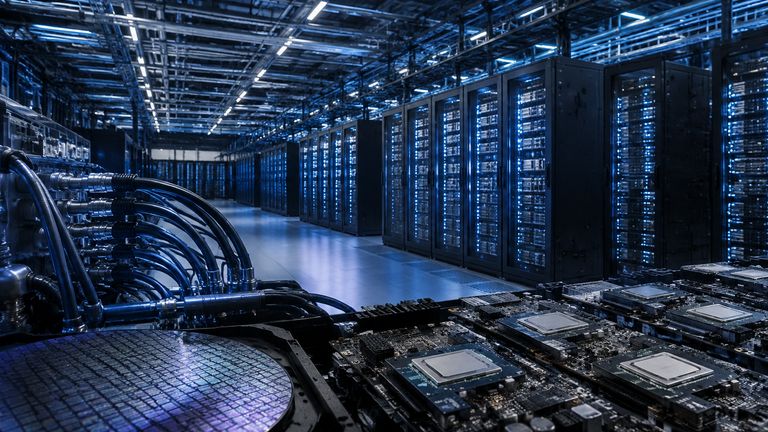
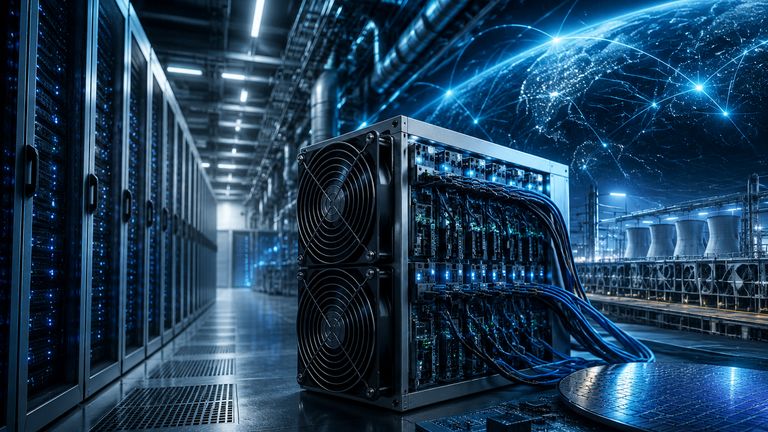
So we are watching one surreal defection after another: mining companies that once vowed to pursue “decentralization” are clearing out their server rooms, removing mining rigs, and installing NVIDIA H100 chips, and even the latest GB200 chips.
Giants such as CoreWeave and TeraWulf have already completed their pivot from “crypto mining” to cloud computing power providers.
For mining company owners, this is liberation.
AI computing power contracts typically run for several years and provide steady income regardless of market swings. Compared with staring at candlestick charts every day and risking a heart attack, serving as a “power intermediary” for major tech companies is clearly more attractive.
But there is one detail many people may have missed.
I recently spoke privately with an executive at a U.S.-listed mining company, who shared one detail: “AI giants are not buying our mining rigs. They are buying our lifeline: power quotas and physical infrastructure.”
Once these resources are converted into AI data centers, it is almost impossible to switch them back to crypto mining.
The cooling logic and power layout inside are completely different. That change is irreversible.
This means the Bitcoin network is undergoing a “permanent” weakening of decentralization.
The Moat Being Quietly Demolished
Many people think miners can switch businesses and that Bitcoin will survive as long as someone keeps mining. But the math does not work that way. Bitcoin’s security is, at its core, a “physical barrier” built from enormous energy consumption and accumulated computing power.
When large amounts of energy infrastructure flow from the Bitcoin network into AI, the cost of attacking Bitcoin is effectively being reduced. Put plainly, attacking Bitcoin used to require building your own power plants and buying mining rigs.
Now, if that infrastructure ends up in the hands of a few major AI companies, then if regulatory winds shift one day, or if tech giants decide to make a move, they will hold the power to cut directly into the network’s backbone.
This “defection of computing power” is making Bitcoin’s network defenses thinner and thinner.
Belief Is Paper-Thin in Front of Capital
In this great migration of computing power, one painful fact has become clear: so-called “digital gold” was never truly independent.
It lives off the physical world’s power systems, and when a more advanced, more profitable form of productivity, AI, emerges, it will be pushed to the margins without mercy.
Bitcoin today looks more like an old building that has already been built but is extremely expensive to maintain.
AI, by contrast, is the skyscraper rising from the ground. Capital has no sentiment; it flows only to places with higher efficiency. Bitcoin once tried to use algorithms to build a “shelter” independent of the real world. But after more than a decade of twists and turns, it has ultimately lost to the jungle rules of the physical world.
When the last mining rig makes way for AI, and the last kilowatt-hour of electricity is used to train models, we will suddenly realize that the “computing power beast” that once made the world tremble is slowly becoming a stepping stone beneath the feet of AI giants.
Perhaps this is the cruelty of the times: you think you are changing the world, when in fact you are merely preparing raw materials for the next era.
Comments
00No comments yet. Be the first to weigh in.