
DeepSeek’s hiring activity has lately drawn almost more attention than its model releases. IDC design and planning engineers, senior data center operations engineers, senior delivery managers: a string of new roles has appeared across major recruiting platforms, prompting industry insiders to say the company is taking an unusually aggressive step.
Put those scattered clues together, and a clear logic emerges. According to the latest reports, DeepSeek’s valuation has surged to 350 billion yuan. It is now putting the money it has raised straight into two areas: computing power infrastructure and upper-layer applications. Buying cards, building server rooms, investing in infrastructure and developing products all point to Liang Wenfeng’s ambition.
Applications in One Hand, Infrastructure in the Other
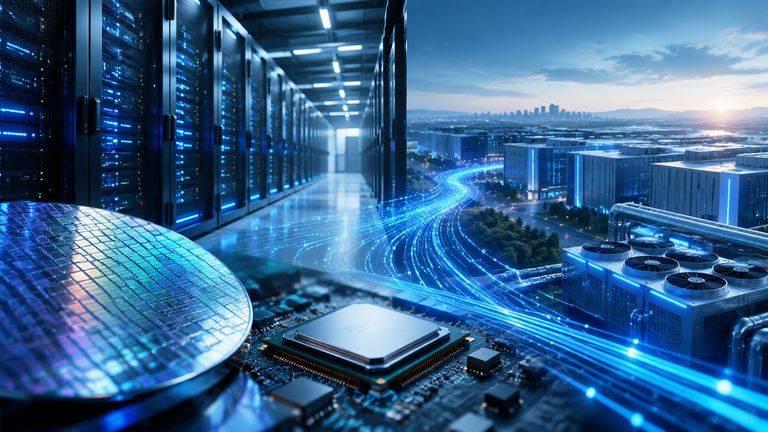
The most consequential and unexpected role in this hiring round is the “IDC Design and Planning Engineer” newly listed on DeepSeek’s official website. Short for internet data center design and planning engineer, it is a core technical role in computing power infrastructure, responsible for end-to-end planning and design from early-stage site selection, schemes and layouts to construction drawings and supporting facilities. In plain terms, this is the key technical owner before a server room is built. For an AI company to recruit a planning and design role specifically for self-built large data centers sends an unmistakable signal: leasing server rooms is no longer enough. DeepSeek wants to build on its own, and quite possibly jump from MW-scale facilities directly to GW-scale hyperscale AI data centers.
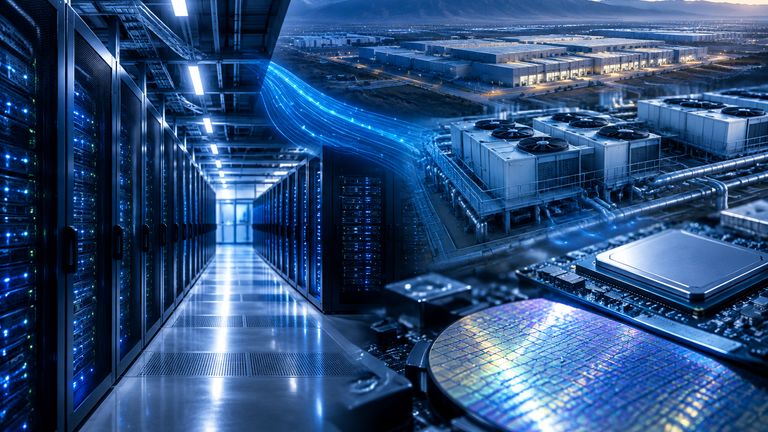
At the same time, DeepSeek’s AI data center in Ulanqab, Inner Mongolia, had already been hiring aggressively. Senior operations engineers and senior delivery managers were being offered monthly salaries of 15,000 to 30,000 yuan, plus 14 months of pay. Building server rooms on the grasslands marked an unexpected extension of the company’s infrastructure push from software into hardware.
Many people’s first reaction was: go to the grasslands to look after servers? It sounds like a joke. But people who know the industry understand what it means: a large-scale computing power cluster has already entered delivery and operations, and real capital is being sunk into hard assets.
If the infrastructure roles show DeepSeek digging downward, another group of new positions shows it probing upward. On May 20, we also found that DeepSeek’s official website had quietly added two new openings: “Agent Harness Product Manager” and “Agent Harness R&D Engineer.” On the same day, a more direct signal came from DeepSeek senior researcher Deli Chen, who publicly recruited on social media with a blunt headline: “Come to DeepSeek and build Code Harness from zero.” The body text was even clearer: “Benchmark Claude Code and build DeepSeek Code Harness.”
DeepSeek is assembling an internal code-agent team aimed squarely at Anthropic’s flagship programming tool, Claude Code. The intent is clear: push from underlying model capabilities into developer toolchains and application-layer products.
On one side, DeepSeek is stacking servers on the grasslands and hiring planning designers. On the other, it is forming a code-agent team under the Harness codename. This hiring round has, almost inadvertently, laid both of DeepSeek’s cards on the table.
50 Billion Yuan in Ammunition for Infrastructure and Productization
The confidence behind this hiring expansion is hard to separate from a closely watched financing round. For a long time, DeepSeek was funded largely by High-Flyer Quant’s own capital, with almost no outside investors involved. But recently, according to multiple media reports, DeepSeek has opened the door to external capital for the first time, with its valuation heading toward 350 billion yuan, or about $48 billion. Potential investors reportedly include Tencent, Alibaba and other major companies. Once that money arrives, how DeepSeek spends it becomes the central question. Judging from the latest headcount it has released, the answer is already clear: spend heavily on core computing power and productization.
At the core computing power layer, the appearance of the IDC design and planning engineer role, together with operations and delivery hiring in Ulanqab, amounts to a declaration that DeepSeek is moving toward a heavy-asset model of self-building and self-operating. According to the job description, the IDC design and planning engineer will have the chance to take part in planning and building MW- to GW-scale infrastructure. “Today’s data centers have evolved from traditional server rooms into large industrial systems that support AI training and inference,” the listing says. The goal is clear: prepare enough computing power foundation for continuous training of trillion-parameter models and future inference services.
The work of building server rooms, laying cooling systems and tuning PUE used to belong mostly to cloud providers and telecom carriers. Model companies stepping in themselves means the pursuit of computing power control and cost boundaries has reached an extreme point.
At the upper product layer, the formation of the Harness team points to DeepSeek’s path toward commercialization. As model capabilities gradually converge, developer tools and agent products are key pieces for retaining developers and building an ecosystem. By pulling in senior researcher Deli Chen internally and calling for a Code Harness to be built from zero, DeepSeek wants to turn its understanding of code into the most usable programming tool in developers’ hands. Its intent to compete with Claude Code and GitHub Copilot is obvious.
At the same time, with financing in place, team expansion and the launch of roles such as delivery manager suggest DeepSeek may become more active in serving enterprise customers, gradually turning research capabilities that were once closer to the lab into engineered, deliverable product solutions.
Buy chips, build server rooms, lay out applications, station engineers on the grasslands and put researchers to work on code agents. Liang Wenfeng, one of the most low-profile leaders in AI, is making his bet in the most hard-core way: putting chips on both computing power infrastructure and productization.
Comments
00No comments yet. Be the first to weigh in.