
Recently, the atmosphere in the computing power sector has grown increasingly charged.
Over the years, Bitcoin miners expanding across the United States have come to realize that securing cheap electricity and industrial land does not guarantee community acceptance.
As developers rush to build massive AI data centers, they are confronting growing resistance—driven by surging power demand, soaring infrastructure costs, and mounting concerns over long-term environmental impact.
The similarities between the two are becoming increasingly hard to ignore.
Bitcoin mining projects routinely promise job creation. This is no joke—a real-time survival struggle over electricity and land is already unfolding.
I. The "Indenture" of Mining Farms
If you think AI and Bitcoin are blood brothers, think again. In the eyes of capital, today’s Bitcoin mining farms are more like “unfinished shells waiting for renovation.”
AI data centers have an extremely urgent need for electricity.
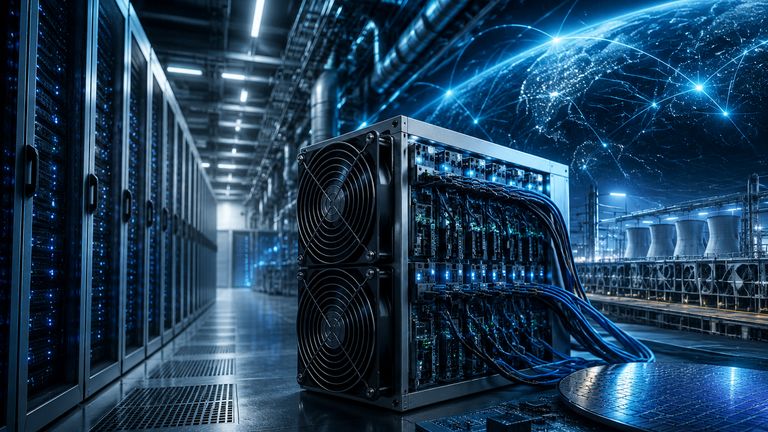
But in the United States, building a new substation and stringing up high-voltage power lines takes at least five years. AI giants that can't afford to wait have chosen the most direct route: buying or retrofitting existing crypto mining farms, which come with ready-made power infrastructure and cooling systems that can be put to use immediately. "If you have a ready power allocation, AI companies are willing to pay several times the premium."
A mining farm broker who regularly travels between North America and Central Asia said in private that "many miners are actually quite conflicted—crypto mining is good, but AI is offering too much. Some mining farm owners have simply made up their minds: they cleared out their rigs and rented their space directly to big tech companies to house H100 GPUs."
Reality is forcing them to make a choice: the total cost of Bitcoin mining has surged to $138,000.
Bitdeer, meanwhile, has announced plans to convert its 570MW mining farm into an AI data center.
Bitcoin mining farms, once hailed as "high-tech," are now being repurposed as the foundation of the AI era.
**Who Is Holding Back the Infrastructure Juggernaut?**
But the conversion was not as simple as swapping out machines.
AI data center construction is running into unprecedented "neighborhood disputes."
To locals, it doesn’t matter whether the facility houses crypto mining rigs or AI servers—both are just “noise-makers” and “power hogs.” Georgia has proposed a moratorium on new data center construction, citing excessive strain on energy and water resources.
As of January 2026, more than 24 data center projects have been delayed or scrapped amid public opposition.
The problem was the location. In the past, mining farms were tucked away in remote mountain valleys, content to operate out of sight and out of mind.
AI data centers need to be close to cities to keep latency low. But industry insiders tell us that many projects face fierce community hearings as soon as they secure land.
Residents have specific worries: the 24-hour roar could depress property prices, and the giant liquid cooling system could drain the groundwater.
To make matters worse, local governments are now starting to do the math.
These behemoths may pay electricity bills, but aside from a handful of security guards and maintenance workers, they create almost no jobs.
"Local officials complain privately: 'It was bustling during construction, but empty once built.' This asset-heavy, job-light model is losing grassroots support."
From "Digital Gold" to "Computing Bedrock"
Behind this shift lies a stark reality: the stratification of computing power.
Once upon a time, computing power was used to "guess numbers" in exchange for Bitcoin. It was a dream of decentralization, and a game for speculators.
But now, computing power has become a strategic resource, much like oil.
"Now, whoever has electricity is the king. The real competition in the future won't be about algorithms—it'll be about power transformers. You can have the most impressive algorithms in the world, but if you can't plug them in anywhere, you'll struggle just to run a demo."
So, this "forced acquisition" of mining farms is essentially an upgrade and iteration of productive forces.
Capital is increasingly channeling expensive electricity toward AI—which generates “intelligence”—rather than toward the hash functions that merely loop through computations.
We tend to think of the digital world as limitless—but reality has a way of slapping us back. Whether it's Bitcoin or AI, both eventually come crashing down to the most primitive, physical constraints: land, electricity, noise, and heat.
The standoff between AI data centers and crypto mining farms sends a clear signal: the "bonanza period" of computing power's great leap forward is over.
When Computing Power Shifts from a 'Virtual Asset' to a 'Community Burden,' Resistance No Longer Comes from Technical Bottlenecks but from the Ordinary People Living Beyond the Data Center Walls
Deep insights often lie in these small acts of resistance: if a technology cannot bring genuine prosperity to the land it occupies, but instead plunders resources recklessly, the faster it moves, the sooner it hits a wall.
The ultimate frontier of computing power is not the vast cosmos, but the humble power cable that can no longer bear the load.
Comments
00No comments yet. Be the first to weigh in.