
The CNNIC's Institute of Policy and International Cooperation released its Report on the Development of Generative AI Applications (2026) on September 29 at the 2026 China Internet Infrastructure Resources Conference, the event's seventh edition.
By the first half of 2026, more than 700 million people in China were using generative AI, a penetration rate above 50%, according to the report. As large models grow more capable, AI is shifting from a novelty tool to something embedded in work, daily life, and industrial production.
Q&A Still the Dominant Use Case
Among use cases, intelligent Q&A remains the most common way people use generative AI. The report found 76% of users turn to generative AI to find answers.
Image and video editing accounted for 47.8% of users, text processing 37.6%, and work summaries and meeting notes 32.5%.
By frequency, usage of general-purpose AI assistants and AI productivity tools more than doubled year over year. Users are moving from occasional experimentation to regular reliance, with AI tools becoming a standard way to handle information, organize materials, and get through daily work.
Smart Hardware Becomes a Key Consumer Gateway for AI
The rise of generative AI is also pulling smart hardware sales along with it.
In the past six months, 38.7% of internet users bought a smart hardware device, the report said. Wearables and 3C consumer electronics are the main points of entry.
Specifically, 20.2% of internet users bought a smart wearable, and 18.2% bought a 3C device such as a smartphone or tablet.
As on-device models, voice interaction, and multimodal capabilities improve, smartphones, smart glasses, smartwatches, and other wearables are turning from plain hardware into significant gateways for AI services.
Intelligent Computing Power Enters the Thousand-EFLOPS Growth Phase
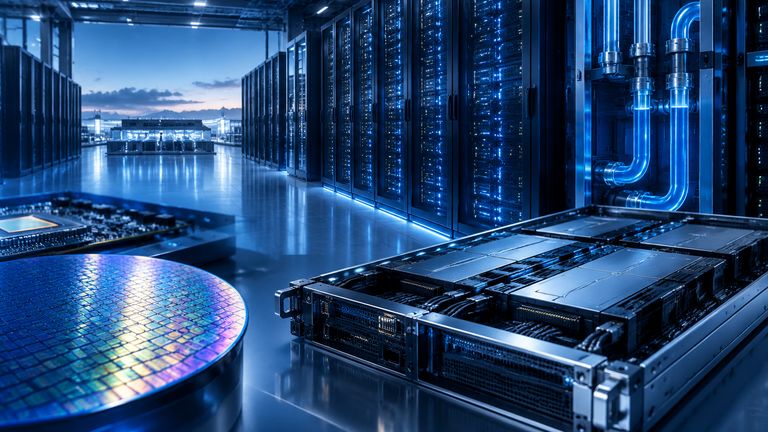
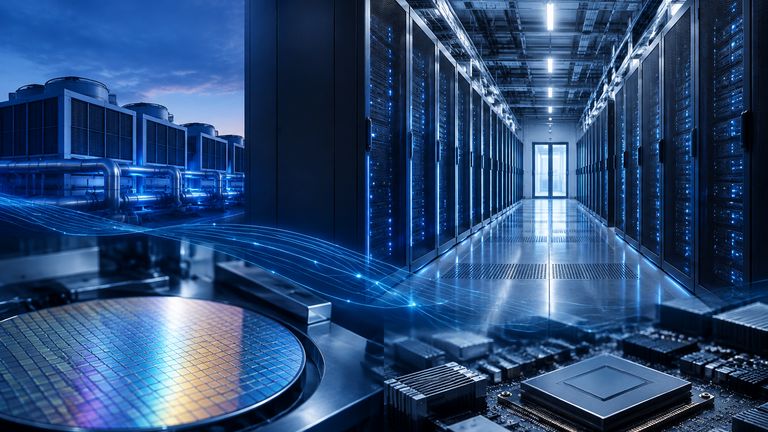
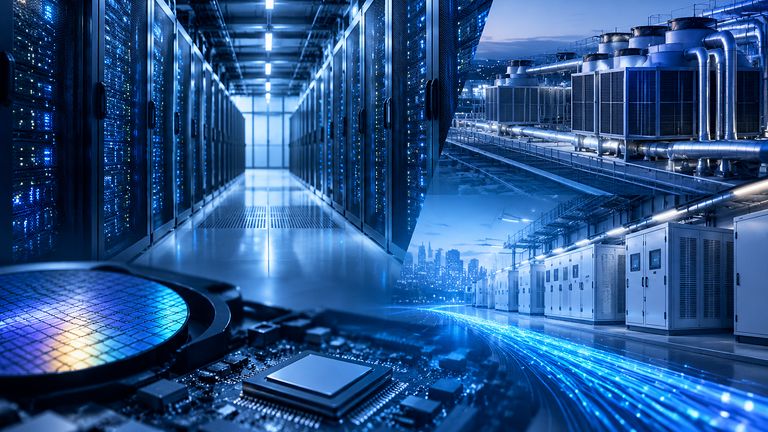
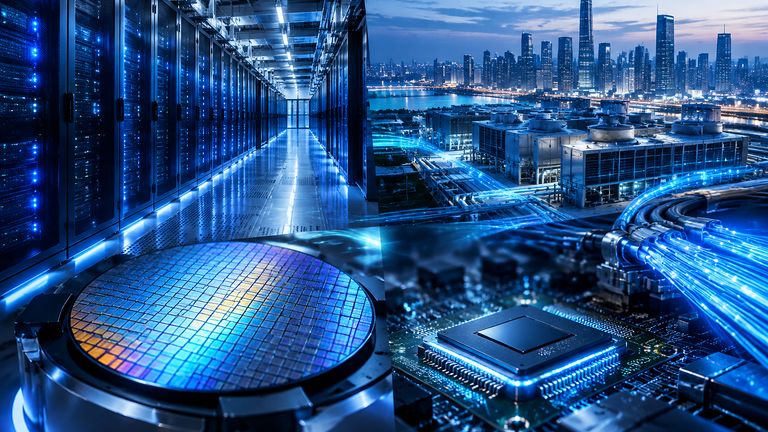
China's intelligent computing power reached 2,185 EFLOPS as of June 2026, up 177% year over year, according to the report.
Notably, the country's first fully domestic 100,000-accelerator AI supercluster is now in operation. Its core hardware and software — chips, compute, storage, networking, and cooling — all rely on domestically controlled technology, making the stack Chinese from the silicon up to the service layer.
That marks a shift in China's computing power infrastructure from large-scale cluster deployments toward the 100,000-accelerator tier. For large model training, complex inference, and industrial-grade agent applications, superscale computing clusters are becoming the foundation for model iteration and real-world deployment.
Domestic Models and Data Resources Move in Step
On model capability, the report notes that homegrown companies including DeepSeek and Moonshot AI have released several trillion-parameter open-source large models, and Chinese teams now occupy all top six spots on global rankings of mainstream large model API usage.
At the same time, domestic large models are being adapted to domestic computing chips at a faster clip, deepening localization across model training, inference deployment, and industry applications.
Work on data resources is also picking up. China has built more than 120,000 high-quality datasets, the report said, tightening the link between computing power, models, and data into a loop in which computing power supports models, models process data, and data feeds back into models.
AI applications now reach key industries including steel, nonferrous metals, power, and telecommunications, moving into core functions such as product R&D, quality inspection, and customer service.
AI Runs Through Manufacturing, Agriculture, and Embodied Intelligence
In industry, China had cultivated 16 national-level advanced manufacturing clusters around digital sectors such as integrated circuits and AI as of June 2026.
More than 30% of manufacturers above a designated size have adopted AI technology, with AI now running through R&D and design, production, quality inspection, and operations and maintenance.
In agriculture, smart farming has been elevated to a more prominent strategic position. In June 2026, the State Council issued its 15th Five-Year Plan for Accelerating Agricultural and Rural Modernization, naming AI adoption and smart agriculture as key tasks.
Over the past year, agricultural large models including Shennong 4.0, Guyu Agricultural Meteorology V2.0, and Fanli 4.0 have been released, putting AI to work on crop monitoring, weather forecasting, pest and disease identification, agricultural production, and business management.
Embodied intelligence has become one of the most active areas in the AI industry. The report said embodied robots keep getting better at completing complex tasks on their own, with applications now spanning industrial production, medical surgery, and consumer services.
In the first half of 2026, China had more than 400 humanoid robot models on the market, and full-year output is expected to exceed 100,000 units.
Policy and Capital Push Deployment Forward
The report concludes that China has assembled a relatively complete AI industry ecosystem.
On policy, the top-level design for generative AI keeps filling in, with the emphasis shifting from pure technology breakthroughs to a mix of innovation, real-world deployment, and governance. Led by the State Council's Opinions on Deepening the Implementation of the "AI Plus" Initiative, government departments have rolled out supporting measures that together cover macro strategy, industry applications, infrastructure, and international cooperation.
On technology, domestic AI chips and computing clusters continue to break through, core algorithm architectures keep iterating, and model inference capability and operating efficiency are improving. Chinese open-source models led by DeepSeek and Qwen are also gaining international reach.
On capital, China saw 1,255 AI-related investment and financing deals in the first half of 2026, equal to 78% of the 2025 full-year total. Disclosed funding came to roughly 250.14 billion yuan, or 182% of the 2025 full-year figure.
From user numbers and computing power infrastructure to industry applications and capital inflows, AI is moving quickly from a technology talking point to core infrastructure underpinning the digital economy and industrial upgrading.
Comments
00No comments yet. Be the first to weigh in.