
AI is accelerating out of the breakthrough phase and into industrial application, and computing power demand is rising quickly alongside it. As large model training, inference and agent applications keep landing in the real economy, chips, servers, data centers, network infrastructure and model invocation services are all becoming significant line items in corporate spending.
At the 2026 China International Fair for Trade in Services, computing power became a recurring phrase across the financial services exhibition area. ICBC launched Zhisuantong, Bank of China released Ciyuantong, Postal Savings Bank of China introduced its U Yisuan computing power loan, and PICC showcased its Suanlibao product line. Banks and insurers are building more finely segmented financial service systems around AI and the computing power industry.
New Production Methods Create New Financial Needs
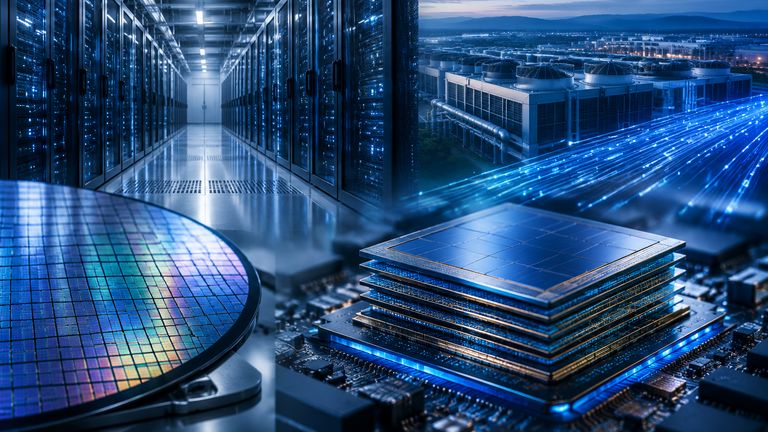
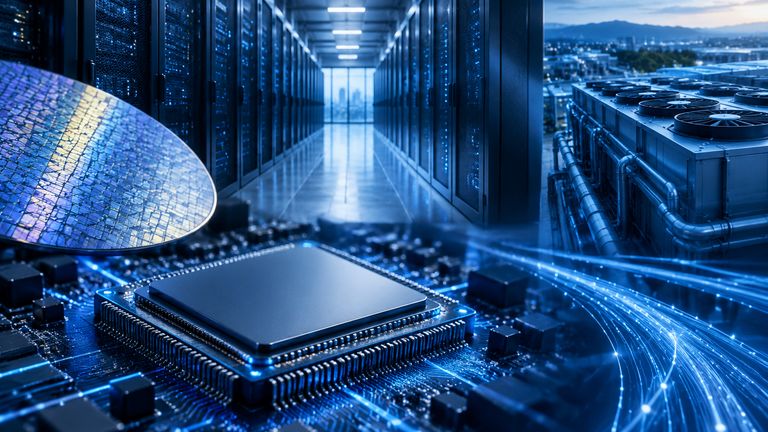
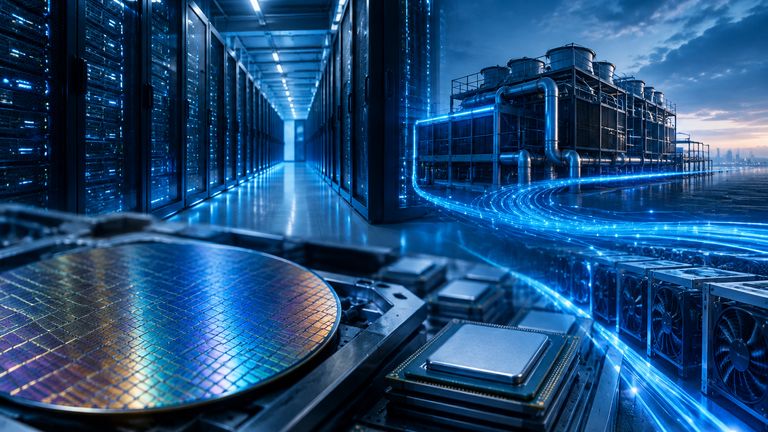
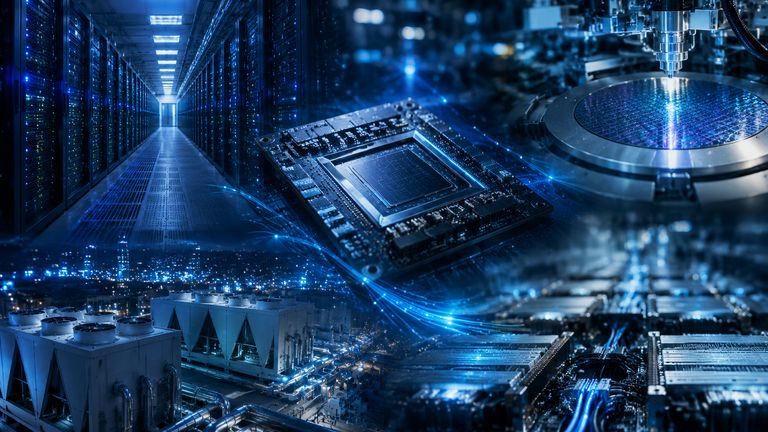
Computing power can be understood as the capacity of equipment to process data and complete computing tasks. For large model companies, training and inference require extensive support from chips, servers, data centers and network infrastructure. Computing power has become the infrastructure underpinning the AI industry, and a resource companies must keep buying as part of doing business.
Tokens were another term heard often in the financial exhibition area at this year's fair. A token is the basic computational unit a large model uses to process text, images and other information, and can be understood as a measure of model usage. Every time a company calls a large model to generate content, run inference or execute a task, it consumes tokens.
As AI applications spread, computing power and tokens are shifting from technical concepts into real operating costs. Building an AI data center takes substantial capital, and buying servers and AI accelerators requires financing. Companies training models or building applications need steady funding too, whether they are purchasing computing power, leasing it or buying tokens.
Unlike traditional manufacturers, many AI companies lack the conventional collateral of plants, land and large fixed assets. Their value sits instead in technology, talent, intellectual property, data and future orders. Financial institutions that once assessed factories, machines and inventory now need to understand a newer set of production factors: computing power, algorithms, data and model invocation.
Wang Yiming, former deputy director of the State Council's Development Research Center, said AI is reshaping the paradigm of technological innovation, industrial logic and the way finance supports growth. Because innovation cycles run long and carry high uncertainty, the financial system needs support mechanisms better matched to how innovation actually works.
Financial Institutions Start Serving the Computing Power Supply Chain
Banks serving tech companies used to focus on lending and working capital for individual firms. Now financial services are extending along the computing power supply chain, both upstream and downstream.
ICBC's Zhisuantong is a case in point. The package bundles eight services: computing power settlement, R&D loans, infrastructure loans, token loans, leasing loans, procurement loans, M&A loans and equity services, covering data center construction, technology R&D, computing power procurement, acquisitions and equity financing.
Hu Xianwen, deputy general manager of ICBC's corporate finance department, said the services address both R&D spending and day-to-day working capital, while also supporting IPO preparation, global account payments and settlement. The aim, he said, is to accompany computing power companies as they grow with long-term, stable financial support.
Financing needs vary considerably across the supply chain. Data centers and computing clusters are asset-heavy, calling for large, long-dated project finance. Large model training and AI application firms are typically asset-light and R&D-intensive, so they lean on credit lines and working capital. Once operating, they also need funding for computing power procurement, leasing and settlement.
Financial institutions are breaking down the sector's financing needs along these lines.
Ciyuantong Extends Finance to Model Invocation
Bank of China is pushing financial services further, into the model usage layer.
At the fair, Bank of China's Beijing branch unveiled Ciyuantong, which provides fixed-asset loans and lease financing to upstream computing power builders while funding token purchases for downstream AI application companies, spanning both ends of the AI supply chain.
Cai Xinghua, president of the Beijing branch, said Bank of China now serves 15,000 tech companies and lends to 7,000 national high-tech enterprises, with outstanding tech loans above 400 billion yuan and AI sector loans above 150 billion yuan.
The shift in what banks finance, from equipment to computing power to tokens, tracks the shift in how AI companies produce.
For a traditional manufacturer, expanding capacity means more plants, equipment and production lines. For an AI company, growth may mean more model calls, more computing power, or heavier investment in data and algorithms. Lenders have to look past financial statements to R&D progress, order books, intellectual property, computing power utilization and model invocation volumes, identifying risk on the basis of understanding the industry.
Suanlibao Covers Both Equipment and Operational Risk
Banks address the funding side of tech growth. Insurers take on more of the risk-sharing as new technologies are deployed.
At the fair, PICC showcased its Suanlibao line of dedicated products. Computing power centers face more complex risks than ordinary plants and equipment. Servers and AI accelerators are high-value hardware, and a power outage, equipment failure or data corruption can interrupt computing services even when the hardware itself survives, disrupting downstream customers' operations.
So computing power insurance is no longer only about whether equipment was damaged. It also has to address whether the compute service can keep running.
PICC Property and Casualty wrote its first Suanlibao policy in Xi'an at the end of June, providing 8 million yuan in coverage for Shaanxi Big Data Group. Beyond hardware losses on servers and AI accelerators, the policy covers operational risks including computing power supply interruption and data loss.
Nie Xin, deputy general manager of PICC P&C's Beijing branch, said the insurer is rolling out products covering the full risk cycle for tech companies, from proof of concept through pilot to trial production, including Quantum Insurance, Suanlibao, drone liability cover and trademark infringement liability cover.
Insurance, in other words, is expanding from insuring assets to insuring R&D, operations and liability.
AI Is Also Helping Insurers Identify Risk
Beyond underwriting the AI industry, AI is becoming a tool insurers use to identify and quantify risk.
PICC P&C, with the Chinese Academy of Meteorological Sciences and Nankai University, released a model for quantifying physical climate risk. It combines future climate scenarios with catastrophe modeling, using hazard, engineering and financial modules to translate climate change, disaster risk and structural damage into quantifiable insurance losses. It can be applied to risk identification, stress testing, portfolio analysis and catastrophe risk management.
A similar shift is underway in commercial space. During the fair, PICC P&C's Zhejiang branch and other partners launched a commercial satellite insurance ecosystem.
Commercial space insurance has largely centered on the launch phase. Once in orbit, satellites still face debris collisions, orbital perturbation, component aging and software faults. The new partnership plans to bring in third-party in-orbit monitoring data and risk assessment capabilities, and to explore insurance designs suited to satellites in different orbits with different design lifetimes, extending coverage from launch through in-orbit operation.
Financial Services Need to Keep Pace With Industrial Innovation
From ground-based computing power centers to commercial satellites in orbit, the newer the industry, the more likely it is to run into thin historical data, difficult risk pricing and blurred lines of liability.
To genuinely enter AI, computing power and commercial space, financial institutions cannot simply rename traditional products. They need to understand supply chain structures, how companies produce, and technical risk. Banks need to track R&D capability, order quality, computing power utilization and cash flow. Insurers need to work with research institutes, tech companies and specialist technical bodies to keep building out data, risk models and assessment standards.
As innovation advances, financial services have to update in step. Through coordination among banks, insurers and other institutions, funding and risk coverage can reach the key stages of R&D, equipment build-out, model training and industrial application more precisely, strengthening the virtuous cycle among technology, industry and finance.
Comments
00No comments yet. Be the first to weigh in.